These days, nonfiction books for kids are creative, compelling, and diverse in both topic and format. But there’s one thing every children’s nonfiction book MUST be:
Accurate.
I mean, a thing called “nonfiction” is supposed to be factually accurate, regardless of who’s going to be reading it. But accuracy is even more important in kids’ books, because kids are still developing their critical thinking skills. As a result, they’re less equipped to identify errors or bias on their own.
Research is how nonfiction writers ensure the accuracy of the info in our books, and it’s always a lengthy and challenging process. When I started researching a book about women erased from history, I knew the work was going to be even harder than usual. Turns out, “hard” was a massive understatement!
Some of the amazing women I found were so well known that it became hard to argue they’d been erased. On the other hand, some of the women had been erased so thoroughly that their stories (and often their names) are no longer recorded at all – assuming they were written down in the first place.
So How Did I Learn About the Women of THE MATILDA EFFECT?
 I started online, looking for articles about forgotten history or “ten amazing women you’ve never heard of.” And I polled all of my friends and colleagues, asking for names of unsung heroines in their fields!
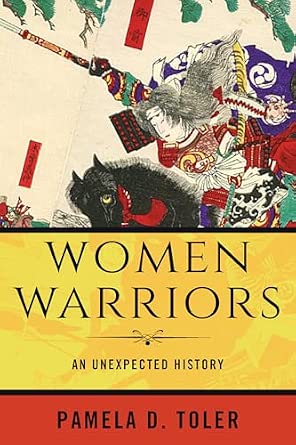
I also read a bunch of general academic books on interesting topics, like Pamela D. Toler’s Women Warriors: An Unexpected History. Not just the main text of the books, but the source lists at the back, and the footnotes where scholars hide weird nuggets of info that didn’t fit the main topic but that they loved too much to cut! #Relatable
(Toler has excellent footnote game, by the way. Her asides made me lol on more than one occasion.)
This exploratory research helped me identify women’s names, which helped me focus my next round of research on learning more about specific people. This is when I started scouring databases of peer-reviewed research articles. I emailed the authors of promising articles, asking if they had more info on interesting women they had mentioned in passing. Dr. Sean Redding has written some fascinating papers on witchcraft trials in South Africa. She sent me the notes she’d made from trial transcripts during a research trip to that country – hard copy records I never would have been able to access on my own.
In contrast to those dusty colonial archives, many historical magazines and newspapers have been digitized, so I checked for articles about my women published in the cities where they once lived. Shout out to the The State Historical Society of Missouri, which sent me an article from a newspaper that went out of business in the 19th century!
I also spent more of my own money buying research material for this project than for anything else I’ve ever written. Many of the books I needed to read were old, obscure, and out of print. University libraries are great places to look for that sort of thing, but THE MATILDA EFFECT features women from around the world… and the Canadian university libraries I have access to tend to focus their collections on topics a little closer to home. I ordered used books from as far away as Texas, Germany, and New Zealand. One lovely woman in the UK sent me the books she had used to research her own PhD thesis!
I lost track of the number of rabbit holes I followed only to crash into brick walls. It was demoralizing to spend weeks pulling threads and following tracks, only to conclude that there just wasn’t enough credible information on a particular woman to fill a four-page chapter in THE MATILDA EFFECT. Which brings me to…
 How Did I Make Sure the Information Was Accurate?
In a previous blog post, I talked about the multi-step process of fact checking nonfiction books for children, much of which happens after writing has begun.
But most evaluation of information happens during that original research. These are some of the questions that I’m always asking myself:
- Does this information make logical sense?
- How does this information compare to other information I’ve gathered on the topic – is it consistent or contradictory? If there’s a contradiction, which source is more credible, and why?
- Was this information published by an organization that values accuracy and does its own fact checking?
- Is the author credible? Do they have professional expertise or lived experience in the subject they are writing about?
- Is the author’s argument supported by evidence? Are they using inflammatory language or trying to provoke an emotional response in me, the reader? Are there any red flags that suggest errors, omissions, or a bias that could influence how the author interprets the facts at hand?
I do this kind of critical thinking for every book, but it was absolutely essential for THE MATILDA EFFECT. That’s because:
- The historical record is always incomplete, and the farther back you go, the worse it gets. Fun fact: in addition to fire, flood, and rampaging armies, MICE are a major source of historical erasure. Mice have no respect for the written word—they eat books, pee on books, make nests out of books… Shout out to one of Toler’s footnotes for that fascinating bit of information!
- The social and cultural forces that caused women to be erased from history in the first place also influence the way information about those women is presented in the few records we still have left.
Which meant that, for this book, I also had to ask myself:
- Did the woman herself write what I’m reading?
- If not (usually not), did the writer live in the same time period as the woman being written about? Stories written down hundreds of years after the fact typically contain fewer facts!
- Was the person who recorded the woman’s story a man? (it was usually a man). Ideas about gender roles and “inappropriate” behaviour for women were MAJOR sources of bias in the research for this book. Especially when the male author in question was worried about women a) getting educated b) getting ideas c) acquiring the kinds of power and influence that many cultures consider “just for men.”
- Was the person who recorded the woman’s story a member of the same cultural group? Was he a member of a privileged group writing about a woman from a marginalized group? When we add the racism to the sexism, it becomes difficult to know what’s historical fact and what’s opinion that’s been filtered through prejudice.
The difficulty of separating facts from the author’s worldview is why I had to do A TON of research, not just about the women themselves, but about the wider context of the time in which they lived. Reading up on gender studies, queer studies, post-colonial studies, critical race theory, disability theory and more helped me understand what was happening in society around these women, which helped me understand what happened to them… and how their stories have been told.
But It Wasn’t All Bad…
I had some absolutely delightful “research wins” on this project, like:
- Going to l’Anse aux Meadows, a Viking Age archaeological site in Newfoundland
- Finding photographs of letters that Sarah Biffin wrote to a man who kept scrapbooks about circuses and performers in traveling shows
- Sending the archivist at the Long Riders’ Guild down a rabbit hole of his own – one that ended in his discovering something new!
- That time the archivist of the US Borax company sent me a DVD of a 1958 episode of Death Valley Days – one that’s not streaming ANYWHERE.
- Figuring out that Marco Polo was wrong!
The results of some of those wins are in THE MATILDA EFFECT. Some of them were cut during editing, but research is never wasted – I use it in blog posts, school visits and workshops.
Speaking of which, I offer workshops on researching a book for writers of all experience levels. If these programs sound like what you need, drop me a line. I’d love to share what I’ve learned.