 Welcome to STEMinism Sunday! As a former woman in science, I have a deep and enduring interest in the experiences and representation of women in STEM fields (science, technology, engineering, and math). This series will be an opportunity for me – and you – to get to know some of these intellectual badasses.
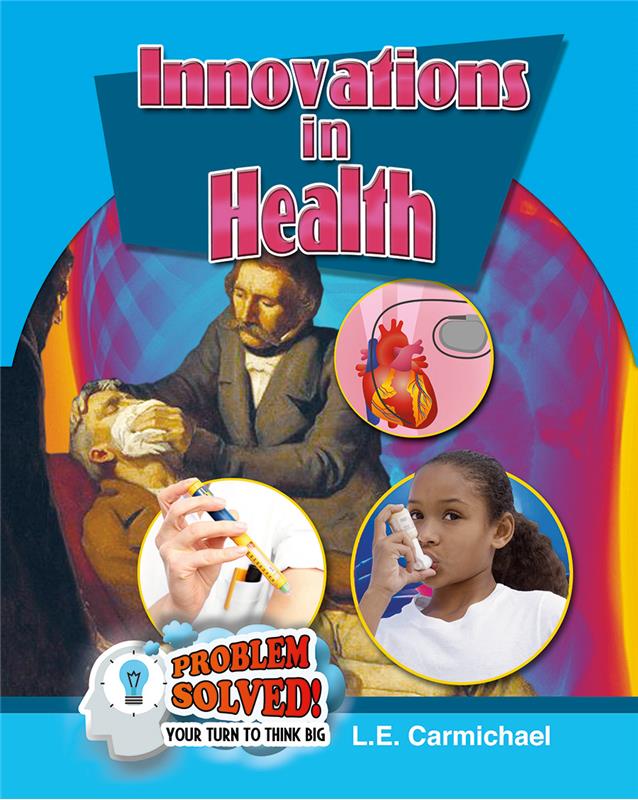
I learned about Dr. Patricia Bath – ophthalmologist and laser scientist – while researching my children’s book, Innovations in Health. Of all the people I profiled, she’s one of my favourites. Bath was not just a woman in science, she was a woman of colour in science. Because she began her career in the 1970s, she faced even more discrimination and condescension than women of colour in STEM fields continue to experience today. In fact, working conditions in the USA were so bad, Bath transferred to a university in Germany, where her colleagues were more willing to let her get on with her ground-breaking research.
Some of the work she did there resulted in Laserphaco. Before Laserphaco, doctors removed cataracts with scalpels or drills. Bath’s device removed them using lasers – a method that was both safer and more precise. To me, the most interesting thing about Bath’s invention was that she first had the idea in 1981, but she couldn’t actually build the device until 1986, because laser technology wasn’t advanced enough! She also became the first African American woman doctor to receive a patent for her invention.
Inventing a New Branch of Medicine
Imagine it’s the 1960s and you’re a Black person in the USA. Congratulations – you’re twice as likely to be blind as a white person.
I hope that fact makes you as mad as it makes me! It made Dr. Patricia Bath mad, too, but, because she was a good scientist, it also made her curious. As she began researching reasons for this disparity, Bath discovered that the most common cause of blindness in white people at the time was old age; in contrast, the most common cause of blindness in Black people was glaucoma – a disease that can be treated if it’s caught early. Many Black Americans, however, didn’t know the early signs of glaucoma, purely because they didn’t have the same to access to medical education or affordable health care. As a result, they were suffering in ways their white neighbours weren’t.
Bath set out to change that, and invented an entirely new branch of medicine called community ophthalmology. Instead of waiting for patients to come to doctor’s offices for care, health care workers (both professionals and trained volunteers) met with patients in schools and seniors’ centers and other spaces in the community. They gave kids eye exams, identifying those who needed glasses to help them succeed in school. And they screened people for eye diseases, identifying and treating problems before they caused blindness.
Because of Bath’s work, thousands of people who might have gone blind still have their sight. Today, community ophthalmology is used to help people all over the world.
A founder of the American Institute for the Prevention of Blindness, Bath continued her fight for sight until her death in 2019.
To learn more, read Bath’s profile on this great website about women in medicine.
1 Comment on ‘STEMinism Sunday: Dr. Patricia Bath and the Fight for Sight’